How to Store Cheese So It Lasts (and Tastes Better)
Plastic wrap suffocates cheese, and the fridge door is too warm. Here is how to wrap, store, and revive every kind of cheese in your kitchen.
 By Theo Brandt
April 8, 2026 · 5 min read
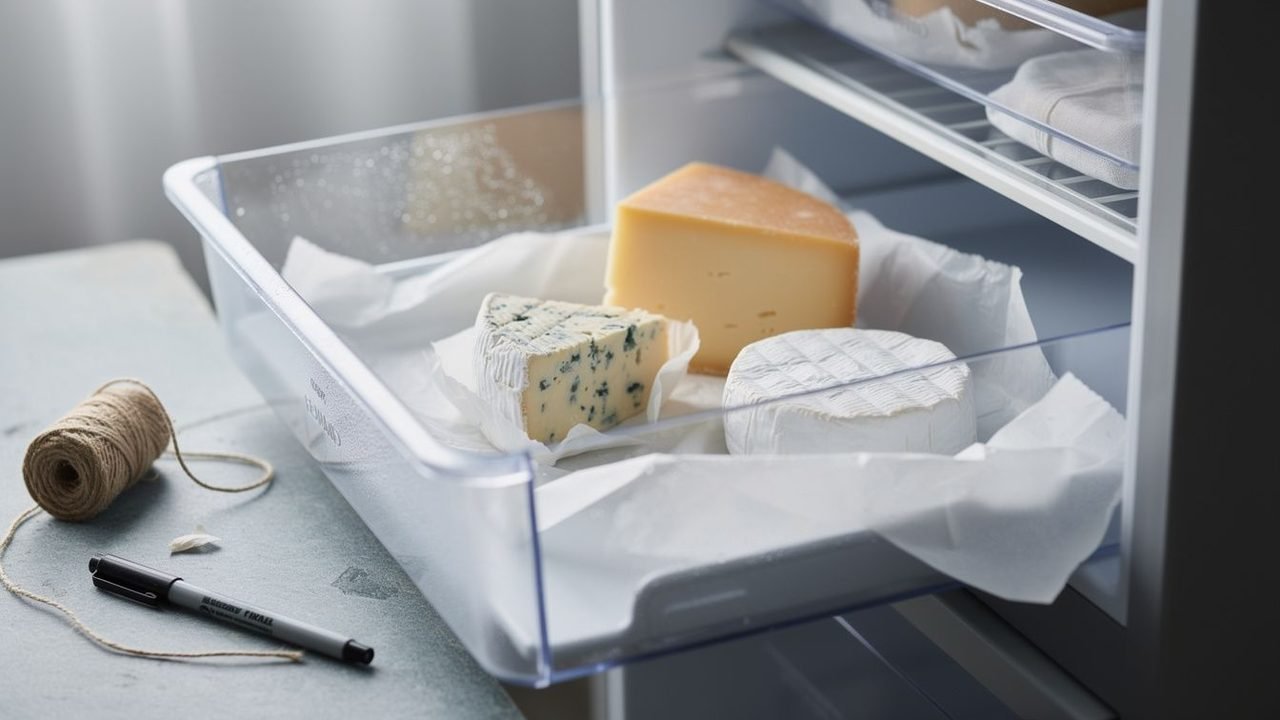
Good cheese is an investment, and nothing stings like finding that gorgeous wedge of Gruyere dried out and cracked, or a pricey Brie that went ammonia-sharp in a week. The good news is that storing cheese properly is not complicated. It mostly comes down to letting cheese breathe without letting it dry out.
Why plastic wrap is not your friend
Cheese is alive in a sense. Many cheeses contain active cultures and molds that keep developing after purchase, and all cheese continues to release moisture. When you wrap cheese tightly in plastic, that moisture gets trapped against the surface. The result can be a slimy texture, off flavors that taste like plastic, and a much faster route to unwanted mold.
At the same time, leaving cheese unwrapped dries it out quickly and lets it absorb every aroma in your refrigerator. The goal is a wrap that holds in some humidity while allowing a little airflow.
The best ways to wrap cheese
Cheese paper
Cheese paper is a two-layer material, usually a waxed or coated paper outside with a thin porous film inside. It is designed for exactly this job, balancing humidity and airflow. If you buy cheese often, it is worth keeping a pack on hand.
Parchment or wax paper plus a loose outer layer
No cheese paper? Wrap the cheese snugly in parchment or wax paper, then place it in a loosely closed zip-top bag or wrap it loosely in foil. The paper wicks moisture and the outer layer slows drying.
A dedicated container
Soft and fresh cheeses do well in a covered container. Wrap them in paper first, or line the container with a folded paper towel to absorb excess moisture, and leave a little space for air.
How to wrap it
- Place the cheese on a sheet of paper large enough to fold around it twice.
- Fold the paper around the cheese as if wrapping a gift, pressing it gently against the cut surfaces.
- Secure it with a piece of tape or twine.
- Write the cheese name and date on the paper so you know what it is and when you bought it.
Use a fresh piece of paper each time you unwrap and rewrap. Reused wrappers carry moisture and bacteria.
Where to keep it in the refrigerator
Most cheese is happiest between about 35 and 45 degrees F with moderate humidity. In a home refrigerator, the vegetable crisper drawer is usually the best spot because it is slightly more humid and has steadier temperatures. The door is the worst spot, since it warms up every time the fridge opens.
Keep strong cheeses, especially washed rinds and blues, in their own container so their aromas do not migrate into butter, milk, or milder cheeses.
Storage guidelines by type
- Hard aged cheeses like Parmesan, Pecorino, and aged Gouda: these are the most forgiving. Well wrapped, a large piece can last several weeks or longer.
- Semi-firm cheeses like cheddar, Gruyere, and Manchego: generally keep for a few weeks once cut, if wrapped properly.
- Soft-ripened cheeses like Brie and Camembert: best eaten within about a week of cutting. They continue to ripen, so taste as you go.
- Blue cheeses: wrap in foil or paper and keep separate. They usually last one to three weeks once cut.
- Fresh cheeses like ricotta, fresh mozzarella, and goat cheese: keep in their original container or liquid, follow the date on the package, and use within a few days of opening.
These are general guidelines. Always trust your senses and the date on the package.
Mold: when to cut and when to toss
Mold on cheese does not always mean the whole piece is ruined, but it depends on the type:
- Hard and semi-firm cheeses: food safety guidance generally says you can cut away at least 1 inch around and below the moldy spot, keeping the knife out of the mold itself. Rewrap the rest in fresh paper.
- Soft cheeses, shredded cheese, and crumbled cheese: discard them if you see unexpected mold. Mold can spread more easily through soft and loose textures.
- Cheeses made with mold, like blue cheese and Brie, are supposed to have their signature molds. If you see mold that looks different from the intended one, such as fuzzy spots of an unexpected color, throw the cheese away.
When in doubt, throw it out.
Can you freeze cheese?
Yes, with a tradeoff. Freezing changes the texture of most cheeses, making them crumbly. Frozen cheese is not ideal for a cheese board, but it works well for cooking. Hard and semi-firm cheeses like cheddar, mozzarella, and Parmesan freeze best. Shred or grate them first, portion into airtight freezer bags, and use within a few months. Thaw in the refrigerator or add straight to casseroles, soups, and sauces.
Avoid freezing soft-ripened and fresh cheeses when you can, since their delicate textures do not recover well.
Reviving tired cheese
A dried-out edge on a hard cheese can simply be trimmed away. Save Parmesan rinds in a bag in the freezer and drop one into soups, stews, or beans for deep savory flavor. Slightly dry cheddar or Gouda is perfect for grating into sauces, where no one will ever notice.
Do not forget to warm it up
Proper cold storage keeps cheese fresh, but cold dulls flavor. Before serving cheese on its own, let it sit at room temperature for 30 to 60 minutes, still wrapped. It will taste the way the cheesemaker intended, and you will get your money's worth out of every bite.